
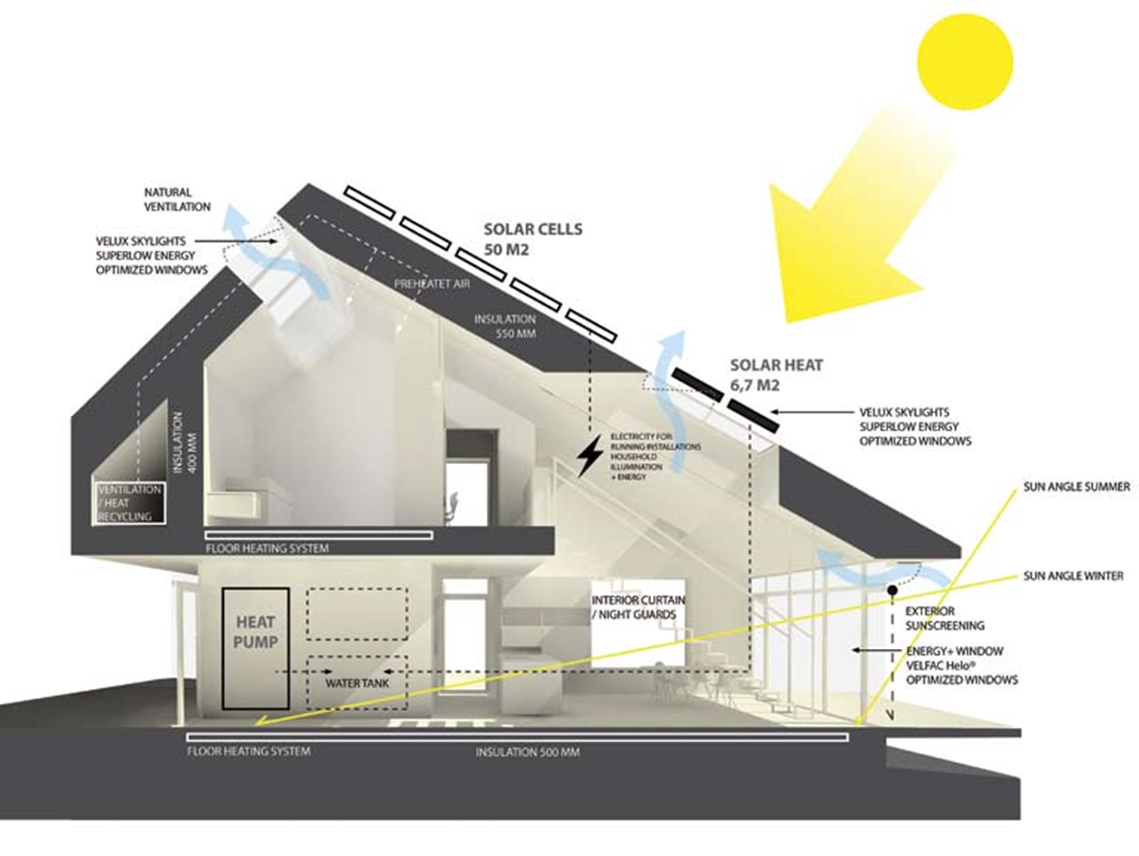
One of the most interesting requests I received while working in building physics has been to evaluate the energy efficiency of the project ‘Home for Life’ according to Dutch energy standards. This dwelling is an example of the active house strategy: the dwelling is energy efficient (even produces more than it needs), creates a comfortable living environment and relates to the local context. A combination of sensors that register heat, CO2 and humidity in all rooms, an outdoor weather station and an intelligent control system ensure a comfortable indoor climate. To optimize energy efficiency a hybrid ventilation system has been applied: the house is naturally ventilated during summer and mechanically, with incorporated heat recovery, during winter. During summer this means saving energy that otherwise would be needed to operate fans. Some more extraordinary measures: when the indoor temperature exceeds the programmed values, windows in both facade and roof automatically open to create a ‘chimney effect‘ which helps reduce the temperature. And automatically controlled solar shades not only exclude excessive heat during hot (summer) days, but are also used to insulate the facade during cold nights to keep heat inside. When focussing on energy efficiency in buildings, designers generally aim to maximize the insulation of the skin by minimizing the total amount of window area (the weakest link). The quality and amount of daylight within the ‘Home for Life’ however is impressive: over twice as much window area is implemented compared to a standard dwelling. The intelligent building concept manages to enable an exceptionally bright indoor atmosphere while maintaining a high level of comfort within the dwelling. More info at Active House.
 brightbuilding
Reblogged this on Energiser.
Can you tell me what is the name of your theme? It’s so simple and wonderful.
Tnx,
Ivana
It’s the ‘Hemingway Rewritten Theme’ (see bottom of the site), have fun! Merlijn