The Ooho: ‘edible’ water

The Ooho

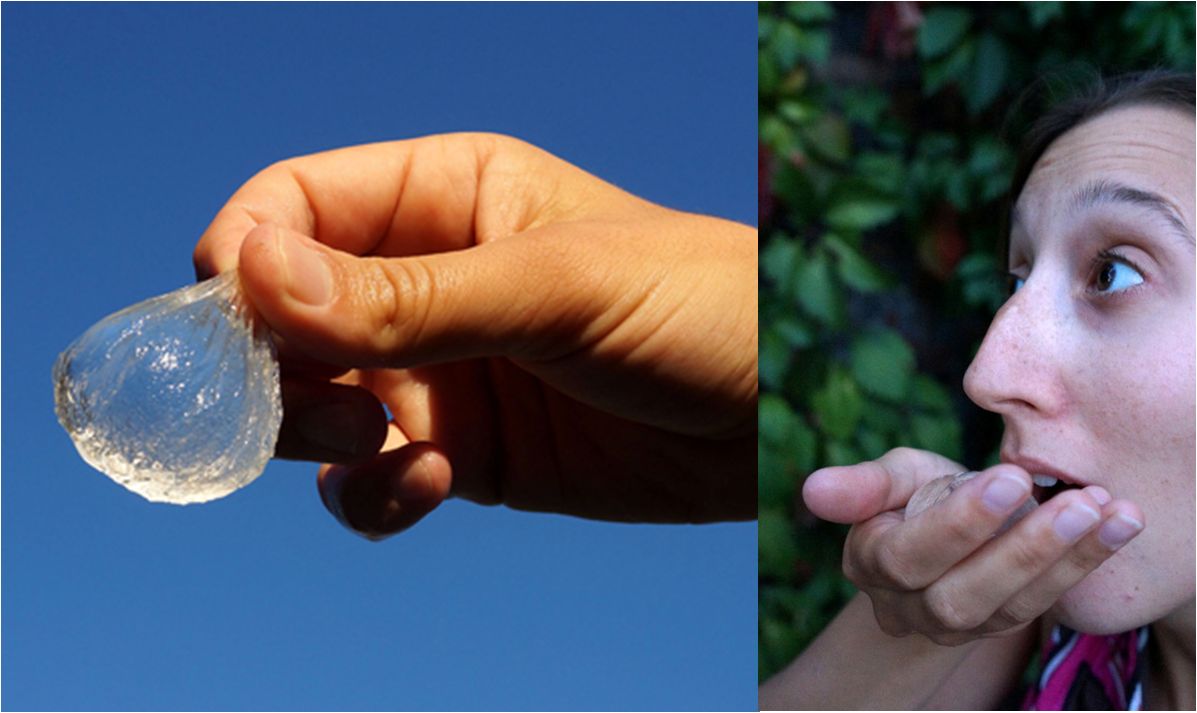
Designers of studio Skipping Rocks Lab have created an edible water ‘bottle’ using a technique called spherification. This technique originates from the 1940s and has been reintroduced in 2003 by El Bulli chef Ferran Adria. To create the water bottles or Ooho’s as they have been named, water is frozen and the ice is placed into a solution containing calcium chloride and brown algae. When the ice meets the solution a thin, flexible and edible skin is created. The skin consists of a double membrane, which makes it possible to dispose of the (less hygienic) outer membrane before consuming the Ooho.  The inner membrane can be consumed together with the water or be thrown away ‘sustainably’: the membrane is biodegradable. Ooho’s are easy and cheap to create, you can even make them in your own kitchen. To provide the Ooho to as many people as possible the team is planning to make the recipe open source. Next to the environmental impact also the financial impact is promising. Producing an Ooho is cheaper than producing a conventional water bottle: the producers claim that the costs are 2 versus 10 cents. At the moment the team works on improving the user friendliness of the design. If a feature like a lid would be added (it is not yet possible to close an opened Ooho) and Ooho’s could be consumed more efficiently, the days of old fashioned water bottles might be counted. More info and a movie here.

 

Thinking outside the rectangle

Hazukashi_Alts Design

Sometimes a project brings a kind of innovation that is not groundbreaking. It does not reduce our impact on the environment or provides new medicine to cure diseases. Sometimes a project just makes us look at our daily environment in a different way. Looking at things in a different way however is how groundbreaking innovations are born. So take a minute every once in a while to observe the details in the world around you, find the peculiarities, reflect, and see where it may bring you :). More info at Alts Design Office.

Active facade – to protect, collect and redirect

WarmteWinWoning_JanssendeJongBouw

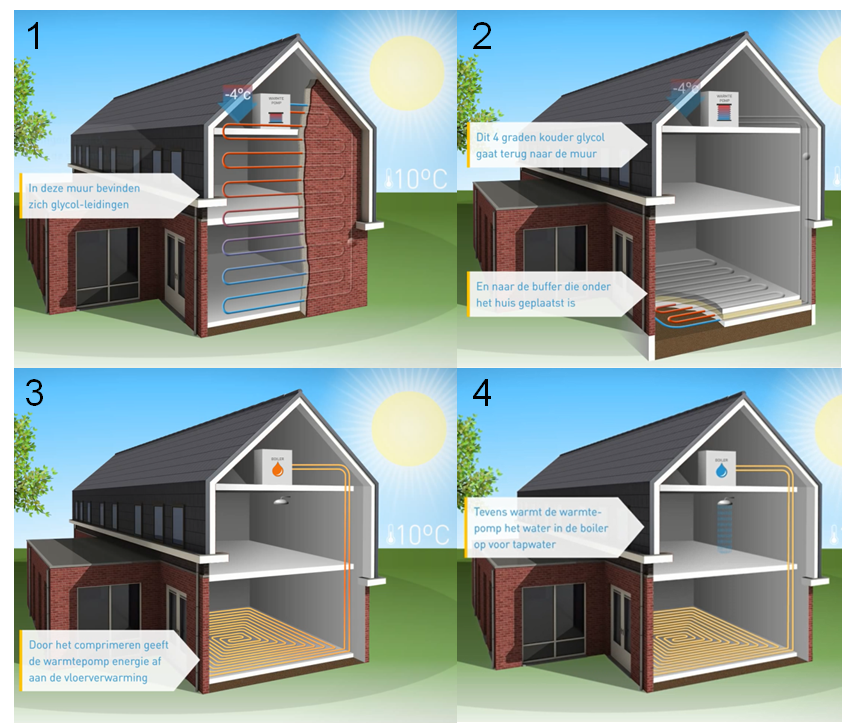
In October 2013 the first ‘WarmteWinWoning’ (free translation: heat-gain-dwelling) has been completed in the Netherlands. A so called ‘WarmteWinMuur’ (heat-gain-facade) has been applied which consists of a prefabricated concrete wall with integrated glycol filled piping. Heat from solar radiation and by convection from the outdoor air is collected by the glycol in the facade and led to a heat pump (1). The heat pump compresses the glycol and the emanating heat is extracted, hereby lowering the temperature of the glycol by approximately 4 degrees. The cooled glycol then is transported to a concrete, thermal buffer underneath the ground floor where it is stored and/or sent back into the wall where it will be reheated (2).  The heat gained through compression is transferred to a low temperature floor heating system (3) and is used to heat water in a boiler that supplies hot tap water (4). The system is controlled by a smart thermostat that ensures a comfortable indoor climate. Because the system responds slow to changes, the temperature is held constant both day and night. According to the developers, for optimal functioning the size of the active facade should be at least 20% of the gross floor area of the dwelling.

The concept has been developed since 2003 when it was tested in a holiday home. In 2008 it has been applied in a daycare centre. Both projects are designed with concrete walls. To make the concept suitable for Dutch housing, where customers prefer the look of brick facades instead of concrete, a prefabricated concrete wall with brick cladding has been developed. In collaboration with Eindhoven University of Technology the wall has been optimized. Because of the temperature changes in the wall, extra dense brick tiles have been firmly attached to the concrete to avoid damage in case of thermal stress. The developers claim that the dwellings can be built in 7 (!) weeks and that the energy bill, when in use, can be up to 45% lower than the bill of a dwelling with a conventional installation concept. More info at Janssen de Jong Bouw.